The short answer: you grow an email list with Facebook ads by giving away one free, useful thing (a checklist, a short guide, a template) on a sign-up page, then running a small ad that sends the right people to that page. Start with a few dollars a day, test several ads against each other, keep the ones that bring sign-ups at a cost you can live with, and only then spend more. The ad is the easy part. The free offer and the audience are where most campaigns win or lose.
Do you use Facebook advertising for your business? When I first wrote this guide in 2014, I had created over 100 Facebook campaigns in one year, each with at least 2 ad sets and each ad set with at least 4 ads. I tried different niches and different countries (the US, France, the UK, Ireland and Romania), split tested everything, and ended up with a system for growing an email list with Facebook ads without going broke.
Facebook’s ad tools have changed a lot since then. Power Editor is gone, Graph Search is gone, and the campaign objectives have new names. The system itself still holds, so I have updated each step below to match how Meta Ads Manager works now.
Step 1: What free offer should I create?
Create a free offer that solves the number one problem your ideal customer is trying to solve. Ask your clients “What is the number one problem you’re trying to solve?” The offer you create is THE solution to THAT problem, and you give it away for FREE on your website. You can deliver it as a PDF (report, cheat sheet, e-book), audio or video, it’s up to you.
What if you don’t have any clients yet? Google can “tell” you what people are looking for. Type your topic into the search box and read the suggestions and the “People also ask” questions. Each one is a problem someone wants solved.
If you want to start with Facebook ads but do not have a product to sell yet, an affiliate marketplace such as JVZoo lets you promote other people’s products for a commission.
Step 2: Where do people sign up?
People sign up on a landing page: one page with one job, capturing the email address. I used Leadpages for this, which has ready-made templates you can set up in a few minutes. Your email tool (Mailchimp, beehiiv, Kit and others) usually has a free sign-up form too, which is enough to start.
Keep the page short: a headline that names the problem, two or three lines on what they get, and one sign-up box. Every extra link is a way out.
Step 3: What should the ad look like?
The ad needs a headline that makes people stop, an image that stands out in the feed, and a clear invitation to get the FREE offer. To create my images I use Canva (free plan) or PowerPoint, and occasionally Fiverr (paid).
In 2014 Facebook limited ads to 20% text in the image. Meta dropped that rule in 2020, but images with less text still tend to read better on a phone, so I still keep the words on the image short.
A practical way to start: publish the post on your Facebook Page first with the link to your landing page. If people react and click without any money behind it, that post is a good candidate for your first ad.
Step 4: Which campaign objective should I choose?
For list building, choose the Leads objective in Meta Ads Manager. Back in 2014 I set ads up in Power Editor with the “Website Conversions” or “Click to Website” objective. Power Editor was folded into Ads Manager in 2018, and in 2022 Meta cut the objectives down to six: Awareness, Traffic, Engagement, Leads, App promotion and Sales.
Inside Leads you can send people to your own landing page (what I recommend, because the email lands straight in your own list) or use a Meta instant form, where people sign up without leaving Facebook. Instant forms are quicker for the visitor, but you then have to move those emails into your email tool yourself or connect the two. If you are not sure, run one ad set of each and compare the cost per sign-up.
Step 5: How much should I spend at first?
Start small. I always started with $5 per ad set per day (max $10) until I got the ad right, and only then scaled it. You can test with even smaller amounts. Write down your cost per sign-up from day one, because that is the number that tells you whether to keep going.
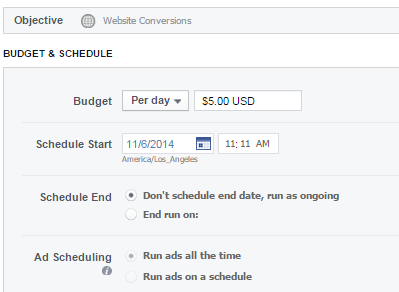
The budget screen from 2014. Ads Manager looks different now, but the daily budget setting works the same way.
Step 6: How do I find my target audience on Facebook?
You find your audience by listing the pages, brands, magazines and people your ideal customer already follows, then targeting those as interests. In my opinion this is the step that decides the campaign, so spend as much time here as you need.
In 2014 I used Facebook’s Graph Search (“Pages liked by people who like…”) to find those interests. Facebook switched Graph Search off in 2019. Today, start in the detailed targeting box in Ads Manager: type one interest and look at the suggestions it gives you. The Meta Ad Library is free too, and shows you the ads your competitors are running right now.
To learn more about your market, I go to Similarweb (I used Alexa for this too, but Amazon closed it in 2022) and check its free reports on similar sites. You’ll be amazed at how much you can learn about your audience from them.
Stay away from the broad interests suggested by default. Think like this: almost everybody may like Footwear (a general interest), but the most passionate people follow Reebok, for example, or Footwear News.
Once you have an email list or a customer list, create a lookalike audience from it. Meta finds people who resemble your subscribers. You’ll be so happy you did!
Step 7: Where should my ad be shown?
Let Meta choose at first, then look at the results. In 2014 I started on the Mobile News Feed and the Desktop News Feed, then split them once an ad worked. Ads Manager now offers Advantage+ placements, which spreads the ad across Facebook, Instagram and Messenger and shifts money to wherever it performs. After a few days, check the breakdown by placement and turn off any placement that brings clicks but no sign-ups.
Step 8: Should I let Facebook optimise my ads?
Yes. Let Facebook optimise for the same objective your campaign was set up for. After running more than 200 winning Facebook ads, I can say that Facebook does a good job when it optimises for one clear goal. If the campaign is built for leads, optimise for leads, not clicks. I got better results with that setting.
Step 9: How do I track sign-ups from my ads?
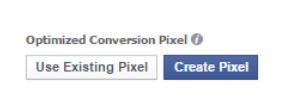
You track them with the Meta Pixel, a small piece of code you add to your website. Put it on your site and mark your thank-you page (the page people see after they sign up) as a “Lead” event. Ads Manager can then show you exactly how many sign-ups each ad brought. You create the pixel in Meta Events Manager, and most website builders and WordPress plugins have a box where you paste its ID.
Step 10: How do I make my ads perform better?
Open the report and look at the cost per result, broken down. This step is, by far, my favourite. In Ads Manager, use the Breakdown menu to split your results by age, gender, placement and country.
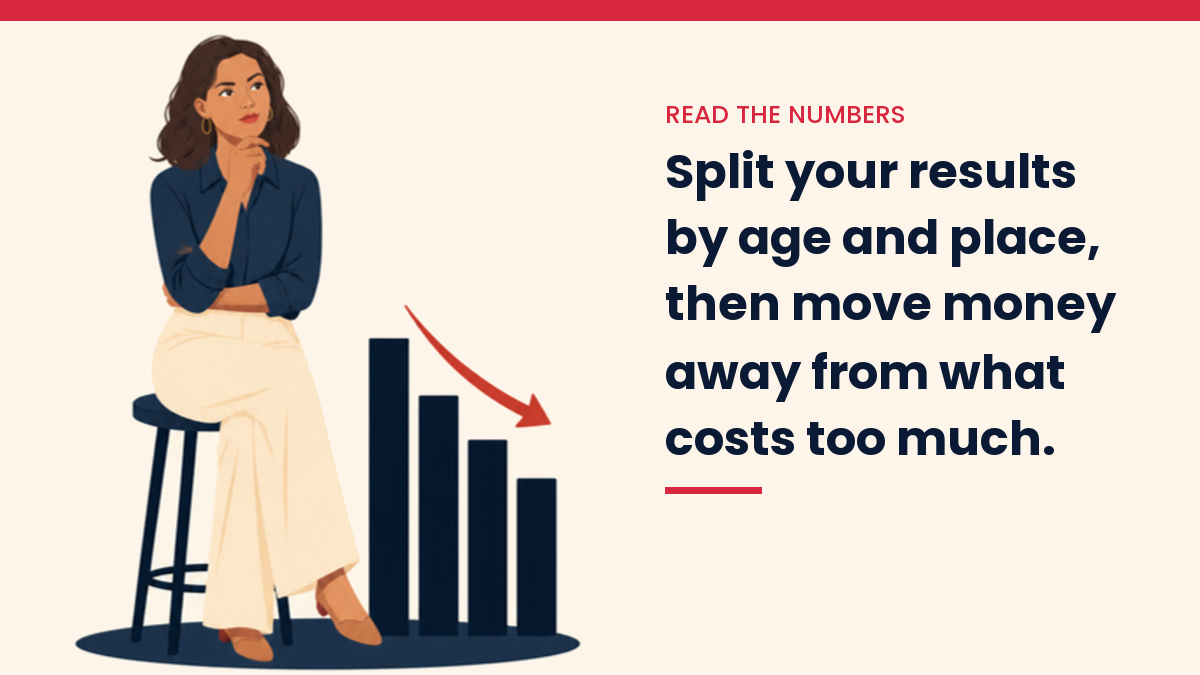

And voila! Move budget towards the groups that sign up for less, and pause the ads that cost the most per sign-up.
Step 11: How do I turn subscribers into buyers?
You show your offer again to people who already know you. People rarely buy the first time they visit your site or see an offer. With Custom Audiences you can show your Facebook ads only to people who visited your website, or to your email subscribers (you upload the list), to close the sale. It’s a way to stay in front of them on more than one platform.
Your emails do most of this work for free. Send your new subscribers a short welcome series before you ask them to buy anything, and use retargeting ads as the second nudge.
Questions people ask
How much does it cost to get email subscribers with Facebook ads?
There is no fixed price. It depends on your country, your niche and your offer, so measure it yourself: start at $5 a day per ad set and divide what you spent by the sign-ups you got.
Do I need a website to build an email list with Facebook ads?
Not strictly. A Meta instant form lets people sign up inside Facebook. A landing page on your own site or in your email tool gives you more control and puts the email straight into your list.
Leads objective or Traffic objective?
Leads, if the goal is sign-ups. Traffic optimises for clicks, and people who click are not always people who sign up.
Can I use these steps for Instagram too?
Yes. Instagram ads are set up in the same Ads Manager, and Advantage+ placements include Instagram automatically.
Want a free plan for getting your first readers and subscribers? The VivaMomentum Starter Kit below is where I would start.
Get the free VivaMomentum Starter Kit
Start with the full guide: The Content-to-Income System: How to Turn Content Into Online Income
Keep reading
Discover more from VivaMomentum
Subscribe to get the latest posts sent to your email.